


 Українська
 Русский
Planken fences - practical, affordable and beautiful
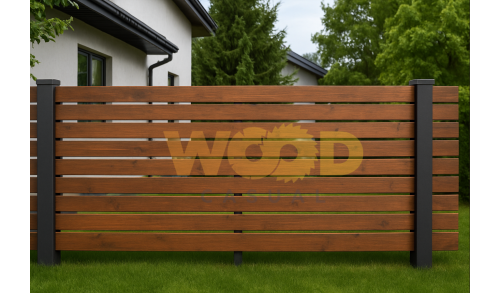
Modern suburban construction increasingly turns to natural materials - and this applies not only to houses, but also to fences. One of the most aesthetic and functional options is a planken fence. Such a design not only emphasizes the architecture of the site, but also ensures durability, ease of maintenance and a high protective function.
What is planken and why is it chosen for fences?
Planken for a fence is a specially processed board with a chamfer, which can have a straight or beveled profile. Unlike ordinary planed boards, planken looks neater, does not require adjustment, does not deform with changes in humidity and temperature. The material is suitable for both horizontal and vertical installation.
The main feature for which planken fences are valued is their versatility. Thanks to various types of wood and types of coating, it can be adapted to any landscape or architectural style - from classic to minimalist.
Advantages of a plank fence
Aesthetics. A fence made of wooden planks looks modern, stylish and at the same time natural. It goes well with stone, concrete, metal and green spaces.
Durability. A properly installed and processed plank fence lasts 15-25 years without losing its geometry and appearance.
Ease of installation. You can install a plank fence yourself, especially if you choose a horizontal installation method.
Variability. You can choose a horizontal plank fence, vertical or combined. Different types of coatings are also available: oil, varnish, heat treatment.
Climate resistance. Larch or thermally modified wood planks show themselves especially well - they are not afraid of rain, snow and sun.
Horizontal plank fence: the trend of recent years
A horizontal plank fence is a laconic and modern solution that is often chosen by architects and designers. This type of fencing visually expands the area, makes it more open and light. At the same time, due to the dense installation, the desired level of privacy is maintained.
Horizontal installation on a metal frame with gaps between the planks looks especially impressive. This creates a play of light and shadow, makes the fence more "lively" and dynamic.
How to choose wooden planks for a fence
When choosing, it is important to consider several factors:
Wood species. Larch, pine, ash or thermally modified wood are most often used. Larch is the leader in terms of price/durability.
Profile type. Straight - for a laconic appearance, beveled - for better water drainage and board protection.
Processing. The planken must be protected from moisture and UV rays. Coating with oils with antiseptics is recommended.
Thickness and width. Depends on the desired density of the fence and design features.
Care and operation
A planken fence is easy to care for. Once every 2-3 years, it is enough to renew the coating with oil or varnish to maintain the rich color and protection. With proper installation and regular treatment, a fence made of wooden planks will last for decades without major repairs.
Fence planken is an excellent combination of beauty, functionality and affordability. It easily fits into any landscape, allows you to implement various architectural ideas and provides reliable protection of the site. Regardless of whether you choose a fence made of planks for a summer house, a country house or a commercial property, this solution will always look relevant, stylish and natural.
16/06/2025